














 28Fishin' Frenzy
 10Gates of Olympus
 10Sweet Bonanza
 6Sugar Rush
 284Megaways
 248Jackpot
 27Bell Link
 77Dice
 428Animal
 370Asian
 270Egyptian
 319Horror
 206Christmas
 159Adventure
 154Fishing
 167Gems & Diamonds
 124Dragon
 125Irish
 118Gods & Mythology
 214Magic
 93Joker
 76Wild West
 128Pirate
 54Book of
 64Aztec
 48Vegas
 36Buffalo
 24Viking
 38Space







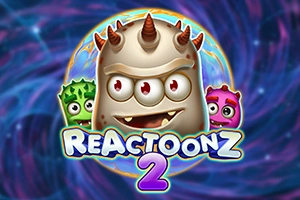
The Reactoonz 2 demo is Play’n GO’s sequel to the cluster-pays alien game that became one of its best-known titles, and the rebuild is genuinely a rebuild rather than a reskin. A single alien is chosen at random each round to “fluctuate”, winning with it creates Electric Wilds, and those wilds charge a meter that eventually releases the Gargantoon. What Play’n GO does not do is publish a single number about it — no RTP, no volatility, no ceiling, no grid size. The mechanics are documented in detail and the maths is not documented at all.
- Free Demo
- At a Glance
- How It Plays
- Paytable
- Features
- Compare
- RTP & Max Win
- Bets & Bankroll
- Tips
- Where to Play
- FAQ
- Verdict
Play the Reactoonz 2 demo free
The demo above runs the full game on play credits — the same cascades, the same meters, the same Gargantoon. No account, no deposit, nothing real at stake. Given that the studio publishes no RTP for this game, free play is also the only way to experience it without the figure mattering. This demo is part of our Play’n GO demo games library.
Reactoonz 2 slot at a glance
More on the figures above. The 1 October 2020 release date and every mechanic described here — cluster wins, the fluctuating alien, Electric Wilds, the Fluctometer, the Quantameter, Energoon and Gargantoon wilds — come from Play’n GO’s own game page. The studio page states no RTP, no volatility, no maximum win and no grid size. The 96.2% RTP and 5,083× ceiling are third-party figures, consistent across independent listings; one catalogue also reports a 94.2% build in circulation. Volatility is disputed between sources, with readings from medium to high, so this review reports the disagreement rather than picking a side.
How the game plays
There are no paylines. Wins are clusters: matching symbols touching each other anywhere on the grid. Winning clusters remove those aliens from the board and new symbols drop in to fill the gaps, so a single spin can cascade several times before it settles.
On top of that sits the idea the sequel is built around. Each round, one of the one-eyed aliens is picked at random to fluctuate, and winning with that fluctuating symbol creates Electric Wilds. Those wilds do two jobs: they fill the Fluctometer, and they charge any uncharged wilds already on the board. They also charge the Quantameter, which is the game’s long game — partial fills add Energoon wilds to the grid, and a full charge releases Gargantoon wilds, the biggest thing in the game. Everything compounds: a cluster feeds a wild, the wild feeds a meter, the meter feeds a bigger wild, and the bigger wild feeds more clusters.
The story behind the game
The original Reactoonz arrived in 2017 and became one of those games that defined a studio’s identity — cluster pays, cascading aliens, and a Gargantoon at the end of the meter. Play’n GO has returned to the format repeatedly since, and this site has reviewed the original and Reactoonz Blitzways alongside this one. The sequel’s contribution is the fluctuating alien: rather than every symbol being equal, one is singled out each round, which gives an otherwise random cascade game a focal point to watch. It is a small change that alters how the game feels to play far more than it alters how it pays.
Symbols and paytable
The specification, split by where it actually comes from. Play’n GO’s own page describes the mechanics thoroughly and publishes no figures at all, so every number below is attributed.
| Win type | Cluster pays — no paylines |
|---|---|
| Grid size | Not published by Play’n GO |
| RTP | 96.2% — third party; the studio publishes none |
| RTP variant | 94.2% reported in circulation by one catalogue |
| Volatility | Disputed — medium, medium-to-high and high all reported |
| Maximum win | 5,083× — third party; the studio publishes none |
| Release date | 1 October 2020 — published by Play’n GO |
| Cascades | Winning clusters remove aliens, new symbols drop in |
| Fluctuating alien | One one-eyed alien chosen at random each round |
| Electric Wilds | Created by winning with the fluctuating symbol |
| Fluctometer | Filled by Electric Wilds |
| Quantameter | Partial fill adds Energoon wilds; full charge releases Gargantoon wilds |
| Jackpot | None |
| Studio | Play’n GO |
It is worth pausing on the shape of that table. Play’n GO will tell you precisely how the Quantameter behaves and precisely when it was released, and will not tell you what the game returns or what it can pay. That is a choice, and it is the opposite of the choice Blueprint makes — which publishes two RTP builds openly and almost nothing about its features. Neither studio gives you the full picture.
Bonus features and free spins
One alien fluctuates each round
A one-eyed alien is chosen at random every round to fluctuate. It is the symbol to watch, because winning with it is what starts the whole chain — no fluctuating win, no Electric Wilds, no meters moving.
Electric Wilds charge everything
Winning with fluctuating symbols creates Electric Wilds. They fill the Fluctometer and they charge uncharged wilds already sitting on the grid, so a single good cluster can wake up wilds that were doing nothing.
The Quantameter is the long game
Electric Wilds charge the Quantameter. Partial fills drop Energoon wilds onto the board; a full charge releases Gargantoon wilds. This is the escalation the whole design points at, and it is built across spins rather than within one.
Clusters cascade
Matching symbols touching anywhere pay, then vanish, and new symbols drop in. One spin can resolve several times over, and each resolution is another chance for the fluctuating symbol to land in a winning group.
- Play’n GO documents the mechanics properly — the Fluctometer, the Quantameter, Energoon and Gargantoon wilds are all described on the studio’s own page, which is more than most studios bother with.
- A published release date, 1 October 2020, straight from the studio. Small thing, but a lot of pages on this site have to say “not published” instead.
- The fluctuating alien gives the game a focus. Cluster games can feel like watching weather; singling out one symbol each round gives you something specific to want.
- Everything compounds. Clusters feed wilds, wilds feed meters, meters feed bigger wilds. The design is coherent in a way sequels often are not.
- The 5,083× figure is oddly precise, which tends to indicate it was taken from certification rather than invented — unlike the suspiciously round ceilings quoted for many games.
- The demo is the complete game, meters included, so the long-game mechanics can be seen without staking anything.
- Play’n GO publishes no RTP at all for this game. The 96.2% everyone quotes is third-party, and the studio’s own page says nothing.
- A 94.2% build is reported in circulation. If that is accurate, the spread between best and worst case is two full points and nothing on the studio page acknowledges it.
- Volatility is genuinely disputed — medium, medium-to-high and high are all in print across reputable listings. That is not a rounding disagreement, it is a different game description.
- No published maximum win and no published grid size, on a page that otherwise explains the mechanics in detail.
- 96.2% is behind the original. The first Reactoonz is recorded on this site at 96.51%, three tenths of a point better.
- The meters take time. The Quantameter is built across spins, so a short session can end without ever seeing the thing the game is named for.
How Reactoonz 2 compares
Against the other Play’n GO cluster and grid games reviewed here, including the two other Reactoonz titles. Every figure below is the one recorded in that game’s own review on this site.
| Game | RTP | Ceiling | Win type | The escalation |
|---|---|---|---|---|
| Reactoonz 2 | 96.2% | 5,083× | Cluster | Quantameter to Gargantoon |
| Reactoonz | 96.51% | 4,570× | Cluster | Gargantoon |
| Reactoonz Blitzways | 96.2% | 10,000× | Blitzways | Reworked for the Blitz format |
| Gemix | Not recorded | 6,025× | Cluster | World progression |
| Annihilator | 96.2% | 5,000× | Cluster | Feature stacking |
Two things stand out. The original Reactoonz returns more — 96.51% against 96.2% — while the sequel pays a slightly higher ceiling, 5,083× against 4,570×. That is the classic sequel trade: a little return traded for a little more headroom. And 96.2% turns up three times in that table, which is Play’n GO’s house figure as clearly as 96.50% is Pragmatic’s. If you are choosing between Play’n GO cluster games on RTP, the original Reactoonz is quietly the better-returning one.
Reactoonz 2 RTP, volatility and max win
Play’n GO publishes no RTP for this game on its own page. Independent listings agree on 96.2%, which would place it a fifth of a point above the 96% reference and squarely on Play’n GO’s house figure — the same 96.2% appears on several of the studio’s games reviewed here. One catalogue also reports a 94.2% build in circulation, which is the sort of lower-RTP variant that studios license to operators and almost never advertise. Because none of this is published by Play’n GO, the information screen inside the game is not just the best source for your casino, it is the only authoritative source at all. Open it before the first spin.
Bets, bankroll and session planning
Play’n GO does not publish a stake range for this title, so none is stated here. The limits in the demo above are whatever your operator has configured. Note that this is a cluster game with cascades, so a single spin can resolve many times — the stake buys the whole sequence, not each individual drop.
Playing on mobile
Cluster grids travel well to phones because there is nothing to trace — matching symbols are simply touching, and the eye finds them without needing to follow a line. The demo above runs in a mobile browser with no app or download. The two meters sit at the edge of the layout and are the one element worth glancing at on a small screen, since the Quantameter is the thing quietly building while everything else happens.
Five things to know before you spin
- Open the information screen and find the RTP. Play’n GO publishes none on its website, a 94.2% build is reported in circulation, and the in-game panel is the only statement that applies to your casino.
- Watch which alien is fluctuating. It changes every round and it is the trigger for the entire chain — Electric Wilds only come from winning with that symbol.
- Judge the game by the Quantameter, not by single spins. The design builds across spins, so a handful of flat rounds is the mechanic working normally rather than the game being cold.
- Treat the volatility reports with caution. Independent sources genuinely disagree, from medium to high, and the studio publishes nothing to settle it.
- 5,083× is a third-party figure. It is precise enough to look like it came from certification, but Play’n GO has never published it.
- The demo shows the meters properly if you give it enough spins. 18+, and set a limit before you leave free play.
Where to play Reactoonz 2 for real money
The demo above needs no account. The listings below are for players who want to play for real — each one is reviewed against our published methodology. 18+, play responsibly.
iWild’s 9.8-rated twin with a bigger welcome package and ten days to clear it.
Esports veteran since 2016 carrying both Amusnet and EGT Digital.
The only casino we list with zero unfair clauses in its terms.
Compare all 13 operators on our casino bonuses page. 18+, terms apply — read the review before you deposit anywhere.
Who this slot is for
For players who liked the original Reactoonz and want the same cluster-and-cascade rhythm with a longer build to it. The fluctuating alien and the two meters give the sequel more structure than the first game had, and the demo above is a fair way to see whether that structure appeals. It is harder to recommend to anyone who wants published numbers before they play, because Play’n GO supplies none for this title and the independent sources disagree with each other about the volatility.
Reactoonz 2 demo and slot FAQ
Can I play the Reactoonz 2 demo for free?
What is the RTP of Reactoonz 2?
What is the maximum win?
How volatile is Reactoonz 2?
What is the Quantameter?
What does the fluctuating alien do?
Is Reactoonz 2 better than the original?
When was Reactoonz 2 released?
Our verdict on Reactoonz 2
A sequel that adds structure and subtracts transparency
Reactoonz 2 does what a sequel should: it finds something to change. The fluctuating alien gives each round a focal point the original lacked, and the two meters turn a cascade game into something that builds across a session rather than resetting every spin. Played in the demo above, it is clearly the more interesting of the two games.
Whether it is the better one is a different question, and the answer on this site’s own records is probably not. The original is at 96.51% against the sequel’s 96.2%, and the extra five hundred times on the ceiling is a thin trade for three tenths of a point. The bigger problem is that none of that comes from Play’n GO. The studio will describe the Quantameter in detail and tell you the game came out on 1 October 2020, and then publish no RTP, no volatility and no ceiling — leaving independent sources to disagree among themselves about how volatile it is and one of them to report a 94.2% build nobody acknowledges. A game this well made deserves a specification sheet to match, and it does not have one.
Similar Play’n GO slots
The rest of the Reactoonz line and Play’n GO’s other cluster games, all reviewed here.
Or browse every game we have rated in our free slots hub, where all 10,000+ demos are playable without signing up.
Play responsibly — 18+.