



























 284Megaways
 249Jackpot
 27Bell Link
 77Dice
 424Animal
 368Asian
 268Egyptian
 320Horror
 206Christmas
 156Adventure
 152Fishing
 165Gems & Diamonds
 126Dragon
 124Irish
 118Gods & Mythology
 211Magic
 93Joker
 76Wild West
 128Pirate
 74Candy & Sweets
 53Book of
 62Aztec
 48Vegas
 37Buffalo
 24Viking
 38Space




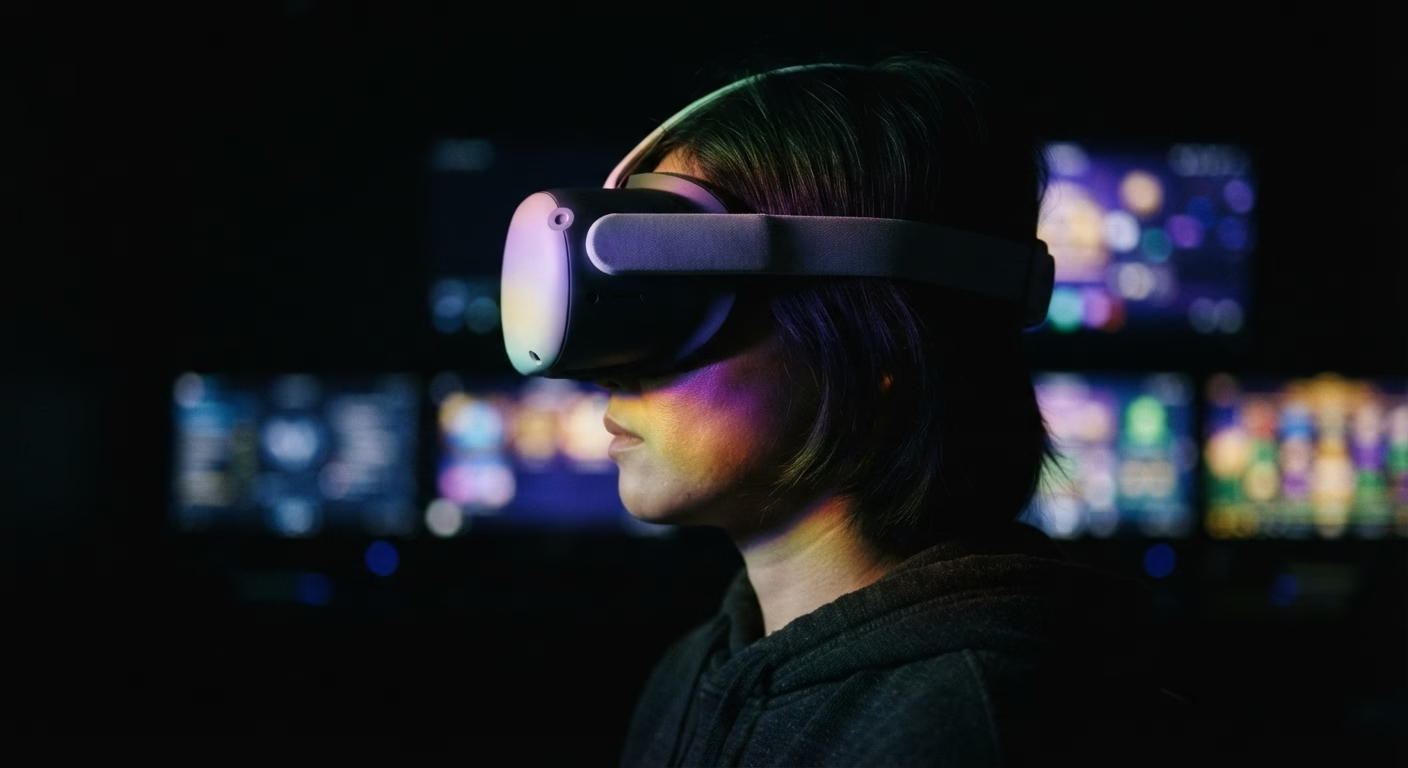
The virtual reality casino has been about to arrive for a decade now. The first one opened in 2015, the headsets have improved beyond recognition since, and yet almost nobody plays this way. That gap between the promise and the uptake is the interesting part of the story, and it is worth understanding before you buy hardware for it.
SlotsMillion — the first virtual reality casino
SlotsMillion, an operator established in 2014, launched what is generally recognised as the world’s first VR casino, with a large slot portfolio and a selection of titles specifically optimised for the headset. You walk into a lobby, you approach a machine, you play it.
That description is also the honest limit of it. The novelty of standing in a rendered casino is real and lasts about twenty minutes; after that you are playing the same game you could have played in a browser, while wearing something heavy on your face. What VR added was presence, not gameplay.
The first VR casino solved a problem slots do not have. A slot is a one-button game — there is nothing a headset can add to the decision, because there is no decision.
Vegas Infinite — where virtual reality actually fits
The platform formerly known as PokerStars VR, now Vegas Infinite, is the clearest demonstration of where the technology belongs. Players sit at a table as customisable avatars, play poker and other games, and — critically — talk to each other, gesture, throw things and behave like people in a room.
That works because poker is a social game of reads and table presence, and a headset restores the layer that online poker stripped out. Nobody needed VR to click fold. They did need something to replace the person sitting opposite, and this is the first technology that has come close.
It is also worth being precise about what it is: a free-to-play social platform rather than a real-money casino. The distinction matters, because it is the reason the experience can be as loose and playful as it is.
What ten years of headset gambling actually produced
Put the decade in order and the pattern is clear. The 2015 wave rebuilt the casino floor and discovered that a rendered lobby is a backdrop, not a feature. The 2018 wave built the poker table and found the one thing headsets genuinely restore. The wave after that chased virtual land and tokens, and mostly ran into regulators.
Three attempts, one durable result. That is not a failure — it is the ordinary shape of a technology finding the narrow job it is actually better at than the alternative. The mistake was ever expecting it to replace the browser rather than sit beside it.
What the headset genuinely gets right
- Presence at a table. Sitting across from other players, at a scale that feels correct, is something no flat screen reproduces.
- Social behaviour. Voice, hand tracking and physical gestures put reads, needling and table talk back into online play.
- Scale and spectacle. Walking through a room is a genuinely different feeling from scrolling a lobby.
- Hardware has stopped being the obstacle. Standalone headsets are cheap enough and light enough that the technology is no longer the excuse.
What the virtual reality casino still gets wrong
Comfort is the first wall. Slot sessions are long and passive, and a headset is neither — the format suits a forty-minute poker game far better than a two-hour slot session. Nothing in the current generation of hardware has changed that.
The second wall is regulatory. A real-money VR casino has to solve the same identity, licensing and responsible-gambling requirements as any other operator, inside an interface where age verification, reality checks and deposit limits are much harder to present clearly. It is far easier to run a free-to-play social product, which is exactly what most of the successful platforms are.
The third is simply that the browser got very good. A modern online slot loads in a second, plays on a phone on a bus and costs nothing to access. Competing with that requires more than atmosphere.
The honest summary after ten years: VR is a better poker room and a worse slot machine, and the industry makes most of its money from slots.
The metaverse casinos, and why most of them went quiet
Around the peak of the Web3 cycle a second kind of virtual reality casino appeared: gambling venues inside open virtual worlds, funded by tokens and accessed through a browser as often as a headset. They attracted a great deal of attention and a great deal of money very quickly.
Most have since shrunk dramatically, for a reason that has nothing to do with the technology. A casino needs a licence, and a venue inside a virtual world sits awkwardly across every jurisdiction at once — which is fine until a regulator asks who is responsible for verifying a player’s age. The projects that survived did so by becoming ordinary licensed operators with an unusual front end.
That is a useful filter for anything in this space. If a virtual casino cannot tell you plainly who licenses it and where, the immersion is not the interesting question.
How to try a virtual reality casino without spending anything
If you own a headset, the free social platforms are the place to start, because they carry the part of the experience that is actually novel — other people. Treat the real-money VR lobbies as a curiosity rather than a destination, and check that any operator you deposit with holds a licence you recognise.
If you do not own a headset, you are not missing a better version of the games. A slot plays identically in a browser, and you can try any of the 8,600 demos in our free slots hub with no signup at all — which is a lower barrier than any headset will ever manage.
Where this goes next
The direction that looks most durable is not a fully rendered casino at all. It is the live dealer table — a real person, a real wheel, a real card shoe, streamed — gaining depth rather than a virtual room gaining realism. Live casino is already one of the fastest-growing formats online, and it delivers most of the presence that VR promised without asking anyone to wear anything.
That is the likeliest future for immersion in this industry: better cameras rather than better goggles. VR will keep its niche at the poker table, where the thing it restores is genuinely missing, and that is a perfectly respectable outcome for a technology that was supposed to replace the casino entirely.
Whatever the interface, the numbers underneath do not change — a headset cannot alter a return percentage. Play responsibly, 18+.
Related Posts